This article contains affiliate links. If you buy through them, we may earn a commission at no extra cost to you.
8 Hidden Gems in Tuscany You Must Visit
Tuscany. The name alone conjures rolling golden hills, sun-bleached farmhouses, and endless rows of cypress trees piercing a cobalt sky. Most travellers arrive in Florence, tick off the Uffizi, queue for the Duomo, and leave feeling like they've seen it all. But the real Tuscany hides beyond the postcard — in crumbling hilltop villages, forgotten thermal springs, and valleys where time has simply refused to move.
Whether you're planning your first Italian escape or returning for a deeper dive, these eight hidden gems deserve a permanent place on your itinerary. Book your accommodation early through touriDat, because these places fill up fast — even the ones the crowds haven't fully found yet.
1. Pitigliano — The Little Jerusalem
Perched dramatically on a tufa rock plateau above deep ravines, Pitigliano looks less like a Tuscan town and more like something conjured from a fantasy novel. Its medieval streets are carved directly into volcanic rock, its buildings rising seamlessly from the cliff face as though they grew there organically.
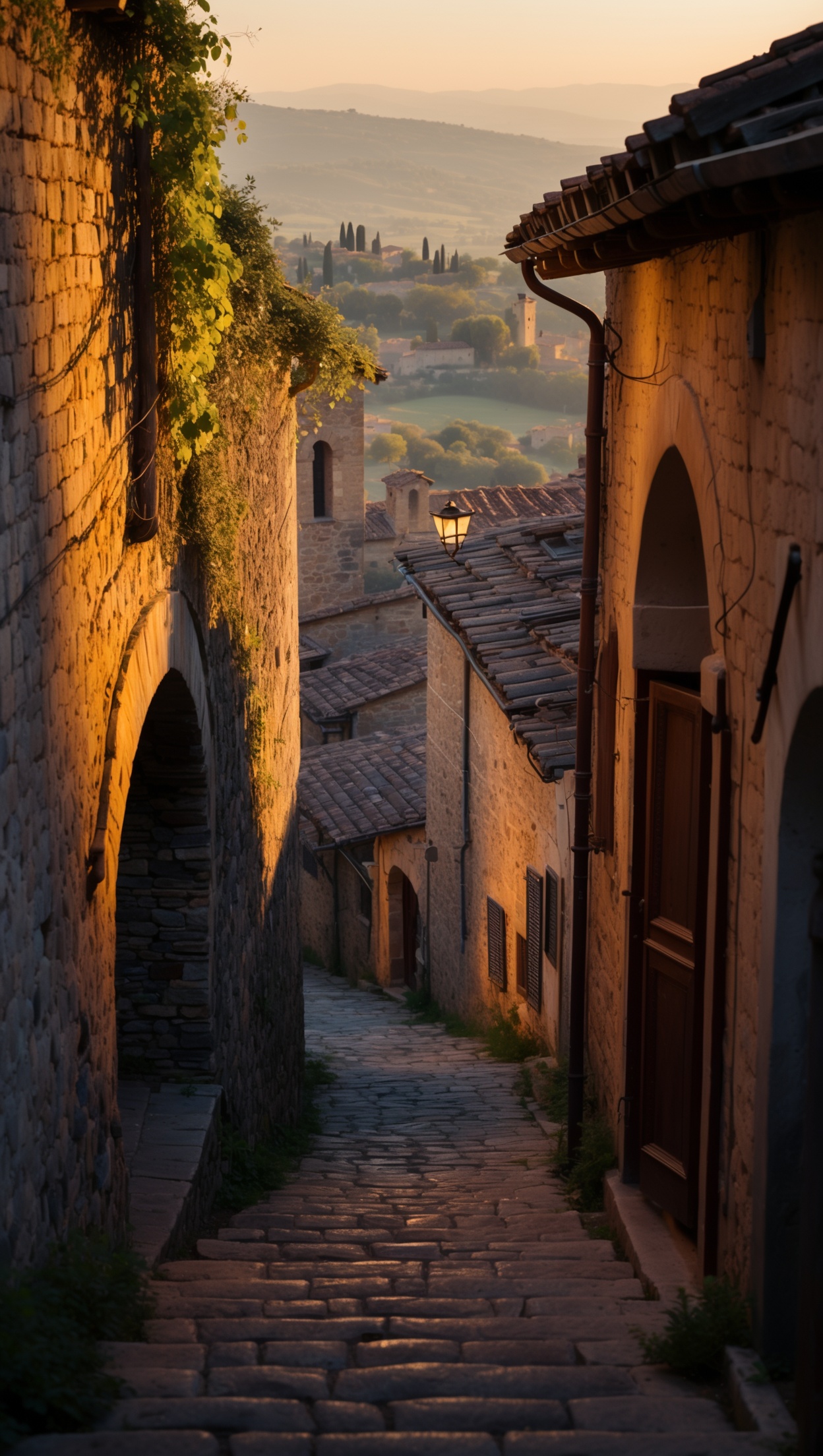
Once a thriving Jewish community gave Pitigliano its nickname, La Piccola Gerusalemme — the Little Jerusalem. Today, a beautifully restored synagogue and Jewish museum honour that heritage. Wander the narrow alleyways at dusk when the stone glows amber in the fading light, and you'll understand why artists have been coming here for centuries.
What to Do
- Explore the Vie Cave — ancient Etruscan sunken roads carved into the tufa rock
- Visit the Museo Ebraico and restored synagogue
- Sample local bianco di Pitigliano wine at a hillside enoteca
Pair your visit with a guided excursion booked through GoWithGuide to uncover the Etruscan history beneath the surface.
2. Sorano — Tuscany's Forgotten Cliff Town
Just a short drive from Pitigliano, Sorano clings to its own tufa outcrop with equal drama and far fewer visitors. Medieval towers, overgrown staircases, and half-abandoned quarters give Sorano a hauntingly beautiful atmosphere. The Fortezza degli Orsini dominates the skyline — wander inside to find sweeping views across the Lente valley that will genuinely leave you breathless.
Stay a night here to experience true Tuscan silence. Find the best rates for local agriturismos through touriDat and wake up to birdsong and rolling mist rather than tour-bus engines.
3. Bagno Vignoni — The Village With a Pool Instead of a Square
Where most Italian villages have a central piazza filled with café tables and locals playing cards, Bagno Vignoni has something entirely different: a vast Renaissance thermal pool, still steaming with naturally heated water, occupying the very heart of the village.
This is one of Tuscany's most surreal and photogenic spots. The waters have been drawing bathers since Roman times — even Lorenzo de' Medici and Saint Catherine of Siena reportedly took the cure here. Today you can't swim in the historic pool itself, but free thermal waterfalls flow just below the village at Parco dei Mulini, where you can soak for free.
Pro Tips
- Arrive at sunrise for mist rising off the thermal pool — purely magical
- Book a spa session at one of the local thermal hotels for full relaxation
- Combine with a Val d'Orcia road trip — the surrounding valley is UNESCO-listed
4. Montefioralle — Italy's Tiniest Walled Village
Just a few minutes' walk uphill from the well-known Greve in Chianti, Montefioralle is one of Italy's smallest and best-preserved medieval villages. Its perfectly circular walls enclose a handful of stone houses, a Romanesque church, and sweeping Chianti vineyard views that look almost too beautiful to be real.
Amerigo Vespucci, the explorer who gave America its name, is believed to have family roots here. Book a private wine-tasting tour through GoWithGuide to explore the surrounding Chianti Classico estates with a local expert who knows where the best bottles are hidden.
5. Anghiari — The Town That Stopped Time
Perched above the Upper Tiber Valley in eastern Tuscany, Anghiari is one of those rare places where medieval Italy feels genuinely intact. Its steep, stone-paved streets, Renaissance loggia, and artisan workshops make it feel more like a living museum than a tourist attraction — because it essentially is. Traditional crafts like woodworking and weaving still thrive here.
The town also lends its name to one of Leonardo da Vinci's most famous (and famously lost) battle paintings. History, craft, and silence — Anghiari delivers all three in abundance.
6. Cetona — The Slow Food Village
Nestled between the Val d'Orcia and Umbria's border, Cetona is the kind of village you stumble upon and never quite want to leave. Its elegant main square feels genuinely local — no souvenir shops, no tourist menus. Just a proper Italian piazza where residents actually live their lives.
Cetona is a stronghold of Tuscan slow food tradition. The surrounding area yields superb lentils, ancient-grain bread, and local pecorino. Book a food-focused day tour through GoWithGuide to eat your way through the area like a proper local.
7. Capalbio — The Tuscany of the Romans
Close to the Lazio border in the wild Maremma region, Capalbio is often called la piccola Roma — the little Rome — for its long history of attracting artists, intellectuals, and Roman aristocracy seeking an escape from the capital. Its perfectly intact medieval walls enclose cobbled lanes, a striking collegiate church, and a remarkably unhurried atmosphere.
Nearby, the eccentric Tarot Garden (Il Giardino dei Tarocchi) created by French-American artist Niki de Saint Phalle is an absolute must. Mosaic-covered sculptures the size of houses rise from the Maremma scrubland — bizarre, brilliant, and utterly unlike anything else in Tuscany.
What to See Nearby
- Tarot Garden — monumental sculpture park open seasonally
- Capalbio Scalo beach — wild, uncrowded Tyrrhenian coastline
- Lago di Burano — a WWF nature reserve with flamingos
Use touriDat to find well-priced agriturismo stays in the Maremma and make Capalbio your base for several days.
8. Radicofani — The Volcano Town on the Edge of Everything
Rising dramatically from an ancient volcanic cone above the Val d'Orcia, Radicofani is the most spectacularly positioned hilltop village in all of Tuscany — and yet almost no one talks about it. The ruined medieval fortress at the summit offers views stretching to Monte Amiata and, on clear days, all the way to the sea.
The village has a certain wild, windswept energy that sets it apart from Tuscany's more polished hill towns. Travellers on the old Via Francigena pilgrimage route passed through here for centuries. Standing at the fortress ruins as the sun drops behind the hills, you'll feel exactly why.
To explore Radicofani properly — and connect it with the wider Val d'Orcia landscape — consider booking a guided private tour through GoWithGuide. A knowledgeable local guide transforms a beautiful view into a full story.
Final Thoughts: Go Beyond the Obvious
Tuscany's famous highlights — Florence, Siena, Pisa, the Cinque Terre coast — are iconic for good reason. But the region's soul lives in its forgotten corners, its crumbling tufa towns, its thermal springs and empty medieval squares. These eight villages offer something increasingly rare in European travel: authenticity without the queue.
Start planning your Tuscan escape today. Search curated accommodation options through touriDat and pair them with handpicked guided experiences on GoWithGuide — and let the real Tuscany surprise you.
Plan your trip with our trusted travel partners: touriDat for curated hotel & experience deals across Europe. Some links are affiliate links.