This article contains affiliate links. If you buy through them, we may earn a commission at no extra cost to you.
Copenhagen at Christmas: the Ultimate Hygge Travel Guide
Few cities in the world do winter quite like Copenhagen. When temperatures drop and darkness descends early, Danes lean into hygge — that untranslatable art of warmth, cosiness and togetherness — and the whole city transforms into something that feels lifted straight from a festive fairy tale. Candlelit windows, steaming mugs of gløgg, lantern-lit cobblestones and the scent of cinnamon drifting from a Christmas market stall: Copenhagen in December is an experience every winter traveller should have at least once.
If you want to experience the city's hidden neighbourhoods and seasonal rituals through local eyes, you can book a fully customised private tour via GoWithGuide — including the ability to message your verified guide directly before booking — so you can plan the perfect hygge itinerary from the very start.
When to Visit Copenhagen at Christmas
The festive season kicks off in earnest in mid-November, when Christmas markets open and lights are strung across the main shopping streets. December is the sweet spot: markets are in full swing, the city is decorated but not yet overwhelmed. Expect daytime temperatures between 0 °C and 5 °C, occasional frost and the possibility of snow, especially toward the end of the month. Pack layers, waterproof boots and a good scarf — and embrace the cold as part of the hygge experience.
The Best Copenhagen Christmas Markets
Tivoli Gardens Christmas Market
Tivoli Gardens is the undisputed centrepiece of Copenhagen's festive season. The historic amusement park (opened 1843) is transformed each winter into a wonderland of fairy lights, decorated trees and wooden market stalls. Highlights include:
- Over a million fairy lights illuminating the grounds each night
- Rides and rollercoasters running in frosty air
- Traditional Danish æbleskiver (puffy pancake balls) with jam and icing sugar
- Hot gløgg (spiced mulled wine) served in collectible ceramic mugs
- Live music and a Christmas pantomime theatre
Buy your entrance ticket in advance online to avoid queues. Tivoli is open late into the evening, and the atmosphere after dark is genuinely magical.
Nyhavn Christmas Market
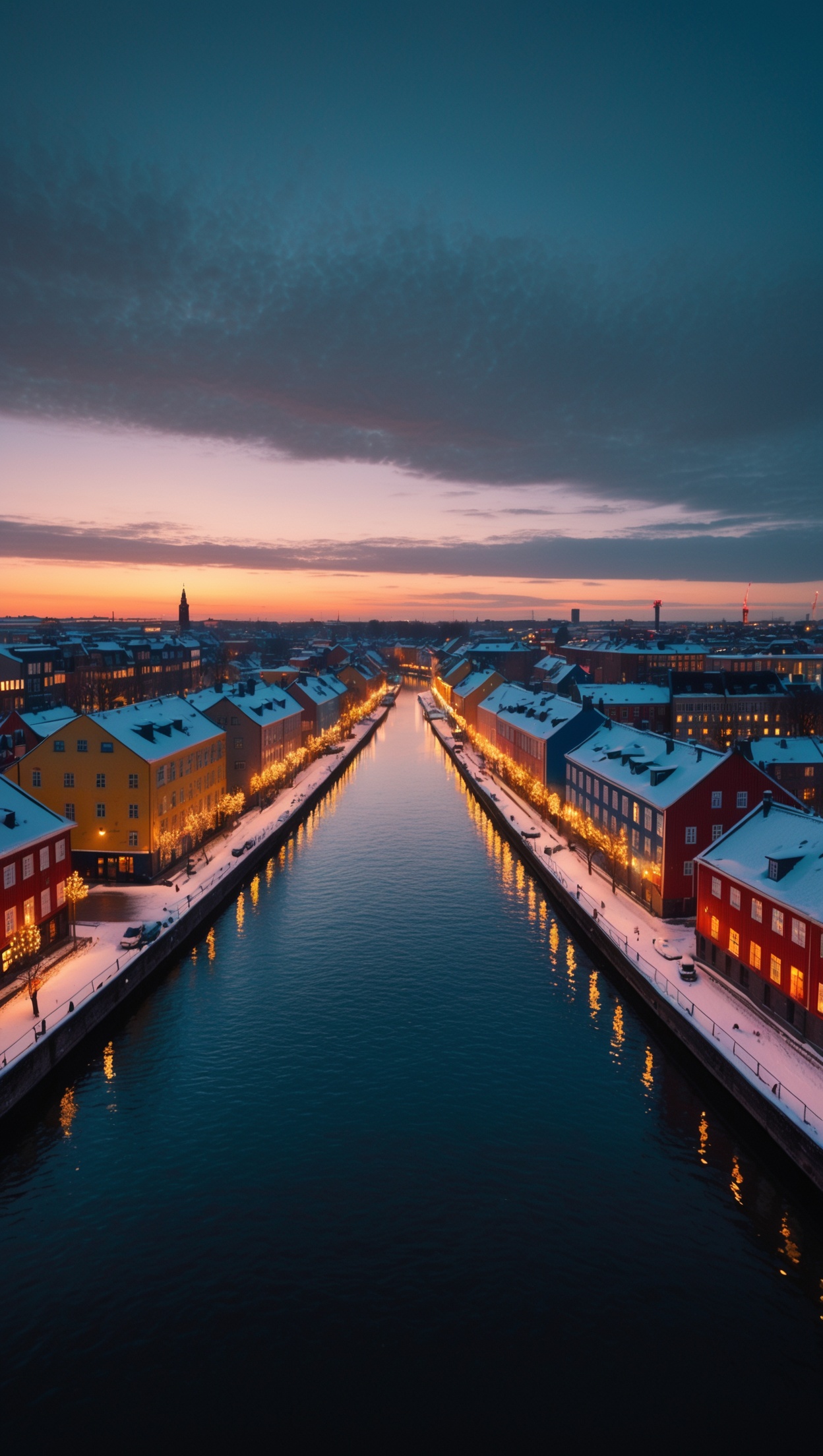
The iconic Nyhavn canal, lined with colourful 17th-century townhouses, becomes even more photogenic at Christmas. Stalls selling handicrafts, ornaments and seasonal food line the waterfront, and the reflections of warm lights in the dark water make this one of the most photographed spots in Scandinavia during winter. Come in the early evening for the best light and atmosphere.
The Christmas Market at Kongens Nytorv
Right at the head of Nyhavn, Kongens Nytorv (King's New Square) hosts a charming open-air market with a beautiful central Christmas tree. It's less crowded than Tivoli and has a more neighbourhood feel — perfect for a slow browse with a hot drink in hand.
Hygge Spots: Where to Warm Up Like a Local
Torvehallerne Food Market
Even in winter, Torvehallerne — Copenhagen's covered food market near Nørreport Station — buzzes with life. Pick up a freshly baked kanelsnegl (cinnamon swirl), a bowl of smørrebrød or a specialty coffee and settle in at a communal table. This is everyday hygge at its most authentic.
Cosy Cafés in Vesterbro and Nørrebro
The neighbourhoods of Vesterbro and Nørrebro are packed with independent cafés that take hygge seriously: think low lighting, candles on every table, mismatched vintage furniture and excellent filter coffee. Look for spots with a stearinlys (candle) in the window — it's an informal signal of welcome. Try The Coffee Collective in Nørrebro or Café Dyrehaven in Vesterbro for a true local feel.
Papirøen / Copenhagen Street Food (Winter Edition)
While the original street food hall on Paper Island has evolved, winter pop-up food events keep the spirit alive. Check local listings for seasonal indoor markets and pop-ups — Copenhagen's food scene never truly goes indoors for the winter.
What to Eat and Drink at Christmas in Copenhagen
- Gløgg: Danish mulled wine, usually served with blanched almonds and raisins. Stronger and spicier than the German version.
- Æbleskiver: Round, fluffy pancake balls, traditionally eaten at Christmas with powdered sugar and ribsgelé (redcurrant jam).
- Risalamande: The classic Danish Christmas dessert — cold rice pudding with whipped cream and cherry sauce, often hiding a whole almond (whoever finds it wins a prize).
- Flæskesteg: Roast pork with crackling, the traditional Danish Christmas dinner, often served with red cabbage and caramelised potatoes.
- Kanelsnegl: Denmark's answer to the cinnamon roll — flatter, butterier and available on every corner in December.
Top Things to Do in Copenhagen in Winter
Ice Skating
An open-air ice rink is set up at Frederiksberg Runddel and sometimes at other locations around the city. Skate hire is available on site — it's a classic Copenhagen winter activity and perfect for all ages.
Visit the National Museum of Denmark
On a grey winter afternoon, the Nationalmuseet is one of the best ways to go deep on Danish history and Viking culture. Entry is free, and the collections are genuinely world-class.
Explore Rosenborg Castle and the King's Garden
Rosenborg Slot looks extraordinary in winter frost. The castle houses the Danish crown jewels and a series of beautifully preserved royal interiors. The surrounding Kongens Have (King's Garden) is a peaceful place for a winter walk.
Take a Canal Boat Tour
Some operators run winter canal tours (check local listings for December availability). Seeing Nyhavn, Christiansborg Palace and the Royal Library from the water on a crisp winter day is unforgettable.
Where to Stay in Copenhagen at Christmas
Copenhagen has accommodation for every budget, but for a hygge Christmas break, look for hotels with in-room fireplaces, spa facilities or a genuinely local neighbourhood setting.
- Indre By (City Centre): Ideal for market access and major sights. Slightly busier but incredibly convenient.
- Vesterbro: The city's most hygge-forward neighbourhood — independent restaurants, great coffee and a relaxed local vibe.
- Frederiksberg: Quieter, more residential, close to the ice rink and Frederiksberg Palace. Perfect if you want to live like a Copenhagener for a few days.
Practical Tips for a Copenhagen Christmas Trip
- Getting there: Copenhagen Airport (CPH) is well connected to most European cities. The metro runs directly from the airport to the city centre in about 15 minutes.
- Getting around: The metro and S-Tog train network covers the city well. Consider a Copenhagen City Card for unlimited public transport and free museum entry.
- Opening hours: Many attractions close on 24–25 December. Tivoli has special Christmas Eve and Christmas Day hours — check the official website before you go.
- Language: English is spoken almost universally in Copenhagen. You won't need Danish to get by, but a tak (thank you) goes a long way.
- Budget: Copenhagen is an expensive city. Budget roughly €15–20 for a sit-down lunch, €5–7 for a coffee and pastry, and €20–30 for Tivoli admission. Shop at supermarkets (Netto, Lidl, Irma) to keep food costs manageable.
Final Thoughts: Why Copenhagen is Perfect at Christmas
Copenhagen at Christmas isn't about spectacle for its own sake. It's about slowing down, warming up and savouring small moments — a candlelit café, a bowl of risalamande, the crunch of frost underfoot in the King's Garden. That's hygge. And no city in the world does it better.
Whether you're planning a romantic winter weekend or a festive family break, Copenhagen in December delivers something rare: a city that genuinely knows how to make winter feel like a gift.
If you want to explore Copenhagen's festive neighbourhoods and hidden hygge spots with a local expert, you can book a fully customisable private tour via GoWithGuide — including the ability to message your verified guide directly before booking — to make every December day count.