7 Ways to See Paris for Less (Miss Nothing)

Paris günstig erleben – 7 Tipps

7 Ways to See Paris for Less (Miss Nothing)

Image: AI-generated · Bild: KI-generiert

🇬🇧 English

This article contains affiliate links. If you buy through them, we may earn a commission at no extra cost to you.

How to Visit Paris on a Budget Without Missing Anything

Paris has a reputation for being expensive — and yes, a croissant on the Champs-Élysées will cost you more than it should. But beneath the glamour is a city that rewards the curious and the savvy with free museums, affordable bistros, and iconic views that cost absolutely nothing. With the right approach, three days in Paris can be both unforgettable and surprisingly affordable.

If you want to go deeper than the guidebook and explore hidden neighbourhoods or get insider stories behind famous landmarks, you can book a fully personalised experience via GoWithGuide — sorry, let's do this properly: you can arrange a private, customisable city tour via GoWithGuide, where you can message your verified local guide directly before you even book. It's the smartest way to spend your first morning and set the tone for the whole trip.

1. Take Advantage of Free Museum Days

Paris is home to some of the world's greatest museums, and many of them open their doors for free on the first Sunday of every month. This includes the Louvre, the Musée d'Orsay, the Centre Pompidou, and the Musée de Cluny. If your trip overlaps with that Sunday, prioritise the Louvre — it's the one museum where queues grow fastest, so arriving at opening time on a free day pays off enormously.

  • Louvre Museum – Free first Sunday of each month (October–March, all year for under-26s from the EU)
  • Musée d'Orsay – Free first Sunday of each month
  • Centre Pompidou – Free first Sunday of each month
  • Musée Carnavalet – Always free, dedicated to the history of Paris

The Musée Carnavalet in Le Marais is permanently free and criminally underrated. It traces the entire history of Paris through gorgeous period rooms and artefacts — easily two hours well spent.

2. See the Icons Without Paying to Enter

Here's the secret most visitors don't realise: you don't have to go inside most of Paris's famous landmarks to experience them fully.

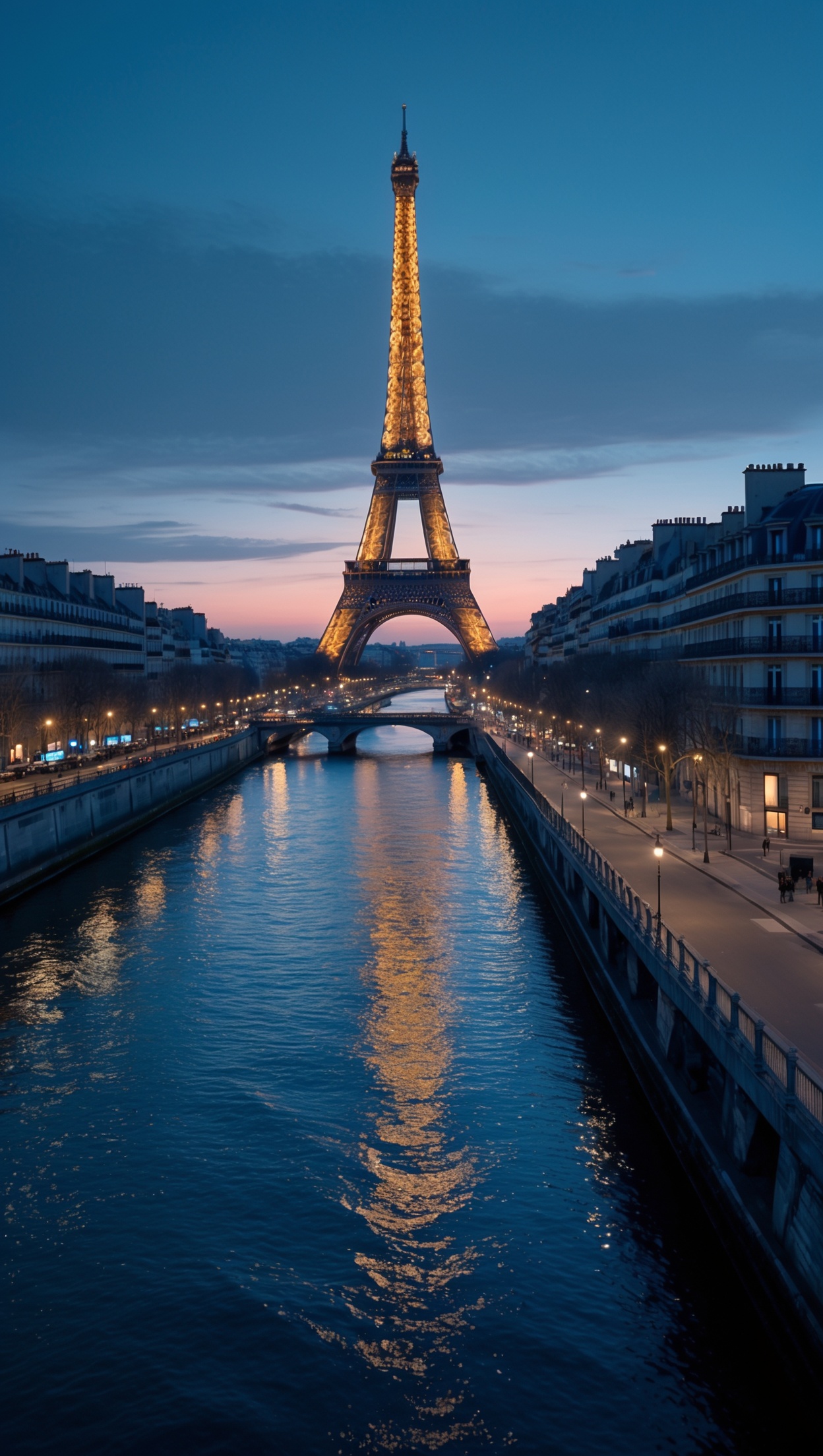
  • Eiffel Tower – The view from Trocadéro is free, spectacular, and arguably better than the view from the top.
  • Notre-Dame Cathedral – The exterior and surrounding Île de la Cité are free to explore on foot.
  • Sacré-Cœur – Entry to the basilica is free; the hilltop view over Paris from the steps costs nothing.
  • Arc de Triomphe – Admire it from Place de l'Étoile or stroll the Champs-Élysées without spending a cent.

The Palais Royal gardens near the Louvre are another gem — serene, photogenic, and completely free. Spend a quiet hour there and you'll feel like a local.

3. Eat Like a Parisian, Not Like a Tourist

The biggest budget drain in Paris isn't the museums — it's the food, especially if you stay near tourist hotspots. Here's how to eat well for less:

  • Buy your breakfast from a boulangerie, not a café. A fresh croissant costs around €1.20 and a pain au chocolat rarely more than €1.50.
  • Look for the plat du jour (dish of the day) at neighbourhood bistros — typically €10–14 and far better quality than tourist-menu restaurants.
  • Explore covered markets like Marché des Enfants Rouges in Le Marais for affordable, diverse lunch options.
  • Grab a jambon-beurre (ham and butter baguette) from any bakery — it's the original Parisian fast food and costs around €3–4.

Avoid restaurants with laminated menus in multiple languages right next to major sights. Instead, walk one or two streets away and look for chalkboard menus written in French only — that's usually a reliable sign you've found the real thing.

4. Use the Metro and Your Own Two Feet

Paris's metro is one of the most efficient in Europe. Buy a carnet of ten tickets or load a Navigo Easy card to get the best per-ride price. For visitors staying three or more days, a Navigo Semaine (weekly pass) covering all zones is often the best value of all.

That said, Paris is an extraordinarily walkable city. The distance from the Louvre to Notre-Dame, for example, is just over a kilometre along the Seine — one of the most beautiful walks in the world and completely free. Many of the best experiences here happen between the sights, not at them.

5. Sleep Smart: Neighbourhoods That Save You Money

Central Paris arrondissements (1st–8th) command premium hotel prices. Instead, consider staying in:

  • Montmartre (18th) – Charming, hilly, with great local cafés and easy metro access.
  • Belleville (20th/11th) – Vibrant, multicultural, and significantly cheaper than central Paris.
  • Bastille area (11th/12th) – Well-connected, lively nightlife, and more affordable options.

Booking a few days in advance (but not too far ahead) and comparing prices across platforms usually yields the best rates. Midweek stays are almost always cheaper than weekends.

6. Free Walking Tours and Neighbourhood Exploration

Several operators run free walking tours of Paris on a tips-only basis — look for meetups at the Hôtel de Ville or near the Louvre. These are great for orientation on day one.

For something more tailored, a private guide arranged through GoWithGuide lets you build an itinerary entirely around your interests — whether that's Impressionist art, Revolutionary history, or the best hidden bistros in the 10th. You message the guide directly, agree on what you want to see, and go from there. Especially worthwhile if you're travelling as a couple or small group, where the cost splits easily.

7. Time Your Visit Right

Paris in January and February is dramatically cheaper than in July and August — flights, hotels, and even some attractions run promotions. The city is quieter, the museums less crowded, and the light on a crisp winter afternoon along the Seine is genuinely beautiful. March and November are also strong budget windows with mild enough weather to walk comfortably.

Quick Budget Checklist for Paris

  • ✔ Check if your visit includes the first Sunday of the month
  • ✔ Download the Paris Museum Pass calculator to see if it's worth it for your specific itinerary
  • ✔ Book your accommodation in the 11th, 18th or 20th arrondissement
  • ✔ Load a Navigo Easy card on arrival at the airport
  • ✔ Plan at least one full day of just walking along the Seine and through Le Marais
  • ✔ Consider a private guide for day one to get the most from every day that follows

Final Thoughts

Paris doesn't have to drain your savings. The city's best experiences — its architecture, its riverbanks, its markets, its neighbourhood energy — are largely free. A little planning, a willingness to walk, and a taste for boulangerie breakfasts will take you further than any expensive tour package ever could.

If you want to explore Paris like a local from day one, you can book a fully customisable private tour via GoWithGuide — including the ability to message your verified local guide directly before booking — to make sure every day of your trip counts.
🇩🇪 Deutsch

Dieser Artikel enthält Affiliate-Links (Werbung). Kaufst du darüber, erhalten wir ggf. eine Provision – für dich ohne Mehrkosten.

Wie man Paris günstig bereist – ohne etwas zu verpassen

Paris gilt als teuer – und wer einen Kaffee auf den Champs-Élysées bestellt, zahlt tatsächlich zu viel. Aber hinter der glamourösen Fassade steckt eine Stadt, die Neugierige und gut Vorbereitete mit kostenlosen Museen, bezahlbaren Bistros und unvergesslichen Ausblicken belohnt, die keinen Cent kosten. Mit dem richtigen Plan ist ein Kurztrip nach Paris nicht nur unvergesslich, sondern auch überraschend günstig – und wer schon bei der Reisebuchung sparen möchte, findet über touriDat attraktive Hotel- und Reisegutscheine für Kurzurlaube in ganz Europa.

1. Kostenlose Museumstage nutzen

Paris beherbergt einige der bedeutendsten Museen der Welt – und viele öffnen am ersten Sonntag jedes Monats kostenlos ihre Türen. Dazu gehören der Louvre, das Musée d'Orsay, das Centre Pompidou und das Musée de Cluny.

  • Louvre – Kostenlos am ersten Sonntag (Oktober–März; für EU-Bürger unter 26 Jahren ganzjährig)
  • Musée d'Orsay – Kostenlos am ersten Sonntag jedes Monats
  • Centre Pompidou – Kostenlos am ersten Sonntag jedes Monats
  • Musée Carnavalet – Immer kostenlos; widmet sich der Geschichte von Paris

Das Musée Carnavalet im Marais-Viertel ist dauerhaft gratis und völlig zu Unrecht kaum bekannt. Es erzählt die gesamte Geschichte von Paris in prachtvoll eingerichteten Räumen und mit faszinierenden Exponaten – leicht zwei Stunden gut investiert.

2. Ikonen erleben, ohne Eintritt zu zahlen

Das größte Geheimnis, das die meisten Besucher nicht kennen: Man muss die berühmtesten Sehenswürdigkeiten von Paris gar nicht von innen sehen, um sie wirklich zu erleben.

  • Eiffelturm – Der Blick vom Trocadéro-Platz ist kostenlos, spektakulär und aus mancher Perspektive sogar schöner als der Ausblick von oben.
  • Notre-Dame – Das Außengelände und die Île de la Cité lassen sich kostenlos zu Fuß erkunden.
  • Sacré-Cœur – Der Eintritt in die Basilika ist frei; der Panoramablick von der Freitreppe kostet nichts.
  • Arc de Triomphe – Wunderbar vom Place de l'Étoile aus zu bewundern, ganz ohne Ticket.

Die Gärten des Palais Royal nahe dem Louvre sind ein weiteres Juwel: ruhig, fotogen und vollständig kostenlos. Eine Stunde dort verbracht, und man fühlt sich wie ein echter Pariser.

3. Essen wie ein Pariser, nicht wie ein Tourist

Der größte Kostenfaktor in Paris ist selten das Museum – es ist das Essen, vor allem wenn man in der Nähe von Touristenattraktionen isst. So geht es besser:

  • Frühstück in der Boulangerie, nicht im Café. Ein frisches Croissant kostet etwa 1,20 €, ein Pain au chocolat selten mehr als 1,50 €.
  • Das Plat du jour (Tagesgericht) in einem Stadtteilbistro: typischerweise 10–14 € und deutlich besser als jede Touristenkarte.
  • Überdachte Märkte wie der Marché des Enfants Rouges im Marais bieten günstige, abwechslungsreiche Mittagsoptionen.
  • Ein Jambon-beurre (Schinken-Butter-Baguette) aus jeder Bäckerei: das originale Pariser Fast Food für 3–4 €.

Restaurants mit laminierten Speisekarten in mehreren Sprachen direkt neben den Sehenswürdigkeiten meidet man am besten. Stattdessen einfach ein oder zwei Straßen weitergehen und nach handgeschriebenen Kreidetafeln auf Französisch Ausschau halten – das ist ein verlässliches Zeichen für Authentizität.

4. Metro und eigene Beine nutzen

Das Pariser Métro ist eines der effizientesten in Europa. Ein Carnet mit zehn Einzeltickets oder eine aufgeladene Navigo-Easy-Karte bieten den besten Preis pro Fahrt. Wer drei oder mehr Tage bleibt, fährt mit dem Navigo Semaine (Wochenticket für alle Zonen) meist am günstigsten.

Gleichzeitig ist Paris eine außergewöhnlich gut zu Fuß erkundbare Stadt. Die Strecke vom Louvre bis Notre-Dame beträgt knapp über einen Kilometer entlang der Seine – einer der schönsten Spaziergänge der Welt, und vollständig kostenlos. Viele der besten Erlebnisse finden hier zwischen den Sehenswürdigkeiten statt, nicht an ihnen.

5. Klug schlafen: Stadtteile, die Geld sparen

Die zentralen Arrondissements (1.–8.) verlangen Höchstpreise für Hotels. Besser schlafen für weniger Geld gelingt in:

  • Montmartre (18. Arr.) – Malerisch, hügelig, mit tollen lokalen Cafés und guter Metroanbindung.
  • Belleville (20./11. Arr.) – Lebendig, multikulturell und deutlich günstiger als das Zentrum.
  • Bastille-Viertel (11./12. Arr.) – Gut vernetzt, lebhaft und mit erschwinglicheren Unterkünften.

Wer lieber mit einem Gutschein reist, findet über touriDat flexible Hotel- und Reisegutscheine für Kurzurlaube in europäischen Städten – darunter regelmäßig wechselnde Angebote für Städtereisen, die sich auch für Paris-Trips lohnen können.

6. Kostenlose Stadtführungen und Viertel-Erkundungen

Mehrere Anbieter organisieren kostenlose Stadtführungen auf Trinkgeldbasis – Treffpunkte sind oft vor dem Hôtel de Ville oder in der Nähe des Louvre. Ideal zur Orientierung am ersten Tag.

Wer sich lieber komplett auf eigene Interessen fokussieren möchte, findet die größte Flexibilität beim eigenständigen Erkunden: das Marais-Viertel, der Canal Saint-Martin, die Butte-aux-Cailles – allesamt kostenlos zu erlaufen und voller Leben, Straßenkunst und kleiner Cafés abseits der Touristenpfade.

7. Den richtigen Reisezeitpunkt wählen

Paris im Januar und Februar ist dramatisch günstiger als im Juli oder August – Flüge, Hotels und sogar manche Attraktionen werben dann mit Sonderpreisen. Die Stadt ist ruhiger, die Museen weniger überfüllt, und das Licht an einem klaren Winternachmittag entlang der Seine ist von echter Schönheit. Auch März und November sind starke Budget-Fenster mit angenehm mildem Wetter zum Flanieren.

Schnell-Checkliste für einen günstigen Paris-Trip

  • ✔ Prüfen, ob der erste Sonntag des Monats in den Reisezeitraum fällt
  • ✔ Den Paris Museum Pass-Kalkulator für das eigene Itinerar testen
  • ✔ Unterkunft im 11., 18. oder 20. Arrondissement buchen
  • ✔ Navigo-Easy-Karte direkt am Flughafen laden
  • ✔ Mindestens einen vollen Tag für die Seine und das Marais einplanen
  • ✔ Reisegutscheine und Hoteldeals vorab vergleichen

Fazit

Paris muss das Konto nicht leeren. Die schönsten Erlebnisse der Stadt – ihre Architektur, die Flussufer, die Märkte, die Energie der Viertel – sind weitgehend kostenlos. Ein bisschen Planung, die Bereitschaft zu Fuß zu gehen und ein Boulangerie-Frühstück am Morgen bringen einen weiter als jedes teure Reisepaket.

Wenn du deinen Paris-Kurztrip schon bei der Unterkunft clever planen möchtest, kannst du über touriDat Hotel- und Reisegutscheine für europäische Städtereisen buchen — inklusive flexibler Auswahlgutscheine und regelmäßig wechselnder Angebote — und so von Anfang an mehr aus deinem Reisebudget herausholen.