This article contains affiliate links. If you buy through them, we may earn a commission at no extra cost to you.
Budapest Christmas Markets and Thermal Baths: A Perfect Winter Escape
Budapest in winter is one of Europe's most rewarding seasonal experiences. The Hungarian capital dresses itself in twinkling lights, mulled wine stalls, and the scent of roasted chestnuts, while its legendary thermal baths offer a steaming, centuries-old antidote to the cold. Whether you are chasing festive atmosphere or simply want to soak away the chill, this city delivers both in generous measure.
If you want to go deeper than the usual tourist trail and explore Budapest with a local who knows its hidden corners, you can book a fully customizable private tour via GoWithGuide — message your verified guide directly before booking to tailor every detail of your itinerary.
The Best Christmas Markets in Budapest
Budapest runs several Christmas markets from late November through early January, each with its own character and setting.
Vörösmarty Square Market
The grandest of Budapest's festive markets occupies Vörösmarty Square in the heart of Pest. It is one of Central Europe's most celebrated Christmas markets, with elegantly crafted wooden stalls selling handmade Hungarian gifts — embroidered linen, painted ceramics, wooden toys, and artisan jewellery. Food stalls offer kürtőskalács (chimney cake), goulash soup, and hot forralt bor (mulled wine). The illuminated façade of the Gerbeaud coffee house provides a picture-perfect backdrop.
Basilica Christmas Market
The market at St. Stephen's Basilica has earned international recognition in recent years, regularly featuring in lists of Europe's most beautiful Christmas markets. The neoclassical basilica is bathed in mapped light projections after dark, and the square fills with premium food and craft vendors. Evening visits, when the crowds thin and the projections begin, are particularly atmospheric.
Városháza Park Market
For a more local feel, the market at Városháza Park beside City Hall offers a relaxed alternative. Prices tend to be gentler, the stalls are creative, and the ice-skating rink nearby adds a charming wintry dimension.
Budapest's Historic Thermal Baths in Winter
Hungary sits above one of the world's richest geothermal zones, and Budapest alone has more than a hundred natural thermal springs. Bathing here in winter, with steam rising into cold December air, is one of the city's defining pleasures.
Széchenyi Thermal Bath
The Széchenyi is the most famous, a vast yellow neo-baroque palace in City Park. Its outdoor pools stay open year-round, and the sight of bathers relaxing in bright blue water while snow dusts the ornate stonework around them is as cinematic as Budapest gets. Book tickets in advance during the Christmas season — weekends sell out early.
Gellért Thermal Bath
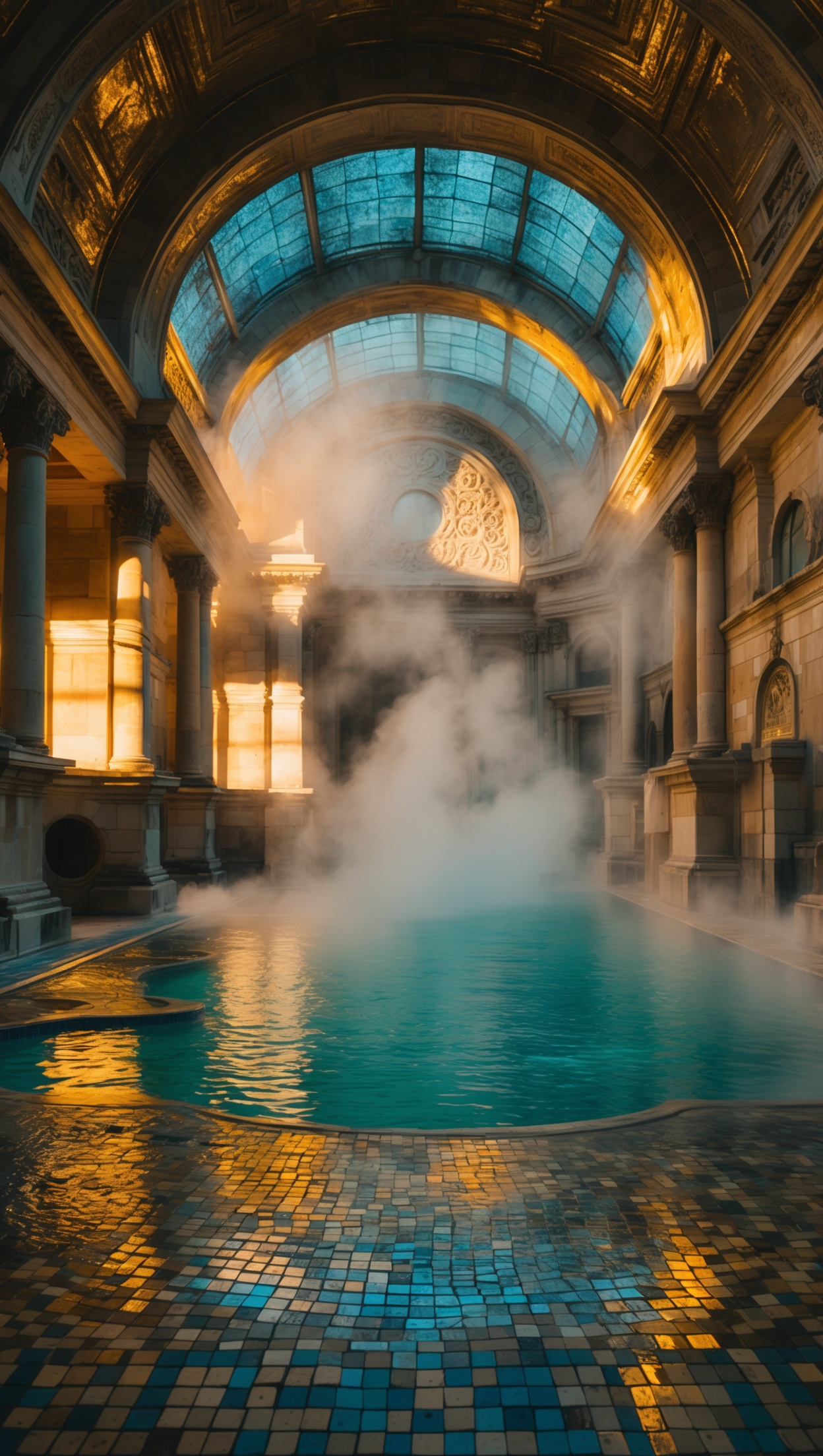
The Gellért Baths, attached to the landmark Gellért Hotel on the Buda side, offer art nouveau splendour: stained-glass ceilings, mosaic floors, and marble columns. The indoor pools feel particularly grand in winter, when the pale light filters through frosted glass. It is a more refined experience than Széchenyi, ideal if you prefer calm elegance over social outdoor soaking.
Rudas Baths
For something more dramatic, the Rudas Baths date to the Ottoman period in the sixteenth century. The original domed chamber, with its star-shaped roof aperture casting shafts of coloured light onto the circular pool below, is extraordinary. A rooftop pool with panoramic Danube views is open on weekend evenings — arrive after dark for the full effect.
Practical Tips for a Budapest Winter Visit
- When to go: Late November to mid-December offers festive atmosphere with manageable crowds. The week before Christmas is the most atmospheric but also the busiest.
- What to wear: Temperatures typically range from -3 °C to 7 °C in December. Pack a warm, waterproof coat, thermal layers, and comfortable walking shoes.
- Getting around: Budapest's metro, tram, and bus network is excellent and cheap. A 24- or 72-hour travel card covers unlimited use of all public transport.
- Bath etiquette: Bring flip-flops and a towel, or rent them on site. Many baths require a swim cap in certain pools — check the rules of your chosen bath in advance.
- Currency: Hungary uses the Hungarian Forint (HUF), not the euro. Most places accept card payments, but carrying some cash is advisable for market stalls.
- Opening hours: Christmas markets typically run from 10:00 to 20:00 (later on weekends). Thermal baths have varying schedules — check official websites before you go.
Where to Stay in Budapest for Winter
The most convenient base for both the Christmas markets and the thermal baths is the inner city districts on the Pest side (Districts V, VI, and VII). You are within walking distance of Vörösmarty Square and a short tram or metro ride from Széchenyi. The Buda side, near the Gellért Hotel or Castle Hill, gives you a quieter atmosphere and easy access to the Rudas and Gellért baths.
Whatever your budget, booking early is essential in December — Budapest has become one of Europe's most popular winter city-break destinations, and hotels fill quickly from late November onward.
Beyond Markets and Baths
Winter is also an excellent time to visit Budapest's indoor cultural highlights. The Hungarian State Opera House runs a full programme through December and January; even a standing ticket gives you access to one of the most opulent opera interiors in Europe. The Hungarian National Museum and the Museum of Fine Arts are warm, crowd-free alternatives to outdoor sightseeing on the coldest days. And a winter evening on the Chain Bridge, with the illuminated Parliament building reflected in the Danube, is an image that stays with you long after you return home.
If you want to explore Budapest's Christmas markets, thermal baths, and hidden gems with expert local knowledge, you can book a fully customizable private tour via GoWithGuide — including the ability to message your verified guide directly before booking — to make every hour of your winter trip count.